
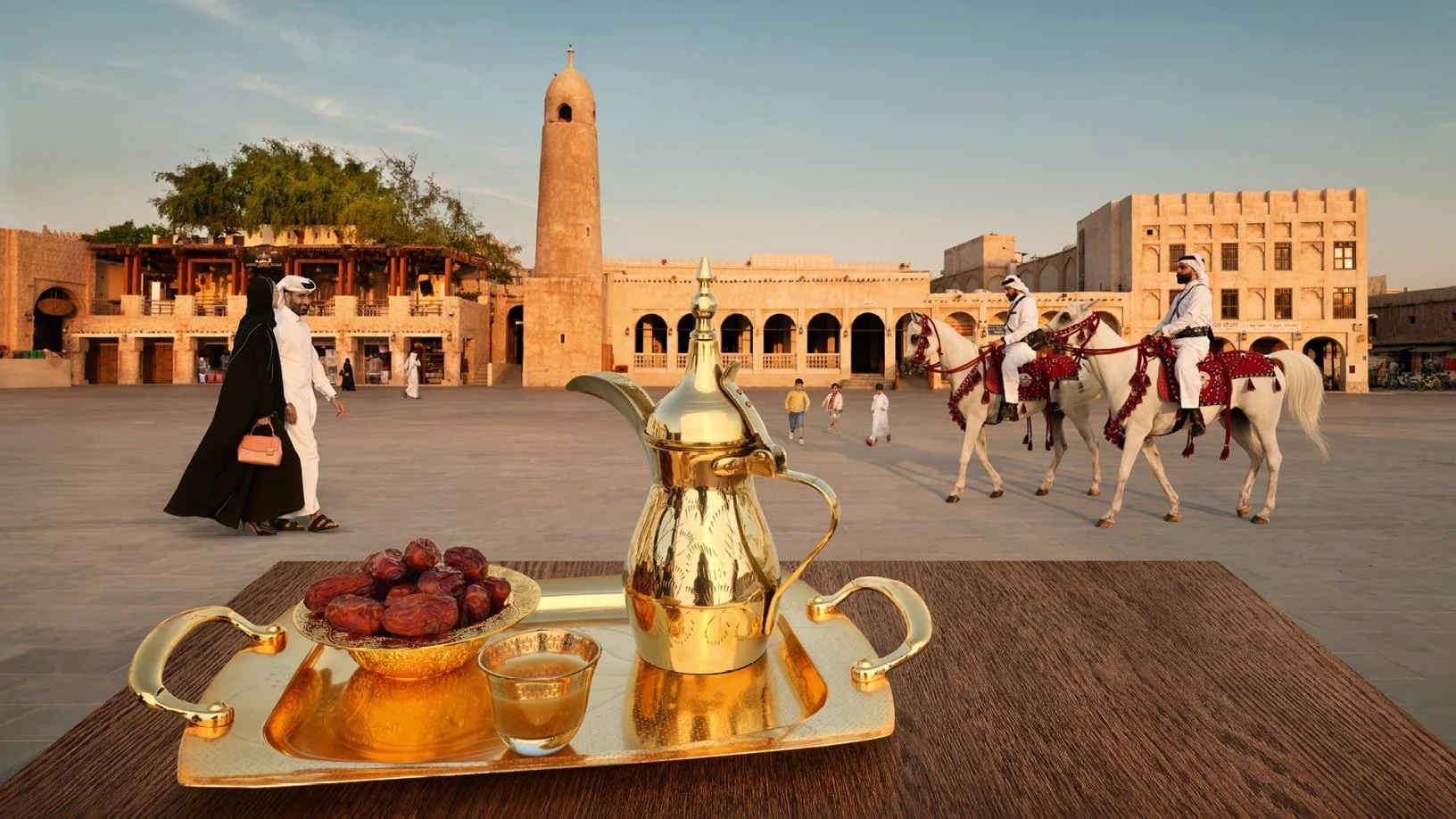
Gulf Dialect (Khaleeji)
The Gulf Arabic (Khaleeji) Dialect Program equips students with the spoken Arabic of everyday life in Saudi, UAE, Qatar & beyond, enabling them to communicate naturally and move through both social and professional settings with confidence. Learning Khaleeji is an essential step toward real spoken fluency: it complements formal study of Arabic and brings classroom knowledge into lived conversation grounded in the cultural contexts of the GCC.
Why Gulf Arabic Matters in Real Life
Even highly proficient students of Arabic often find that the first real test of fluency comes in the everyday moments of the Gulf—making small talk with an official in Abu Dhabi, handling a business appointment in Doha, or navigating a quick exchange at the souq in Jeddah. In these settings, it is Khaleeji, not formal Arabic, that carries the rhythm of real communication. A solid foundation in Gulf dialect is therefore essential for anyone who wants to participate with ease in daily life, study, and work across the region.
Curriculum Levels
-
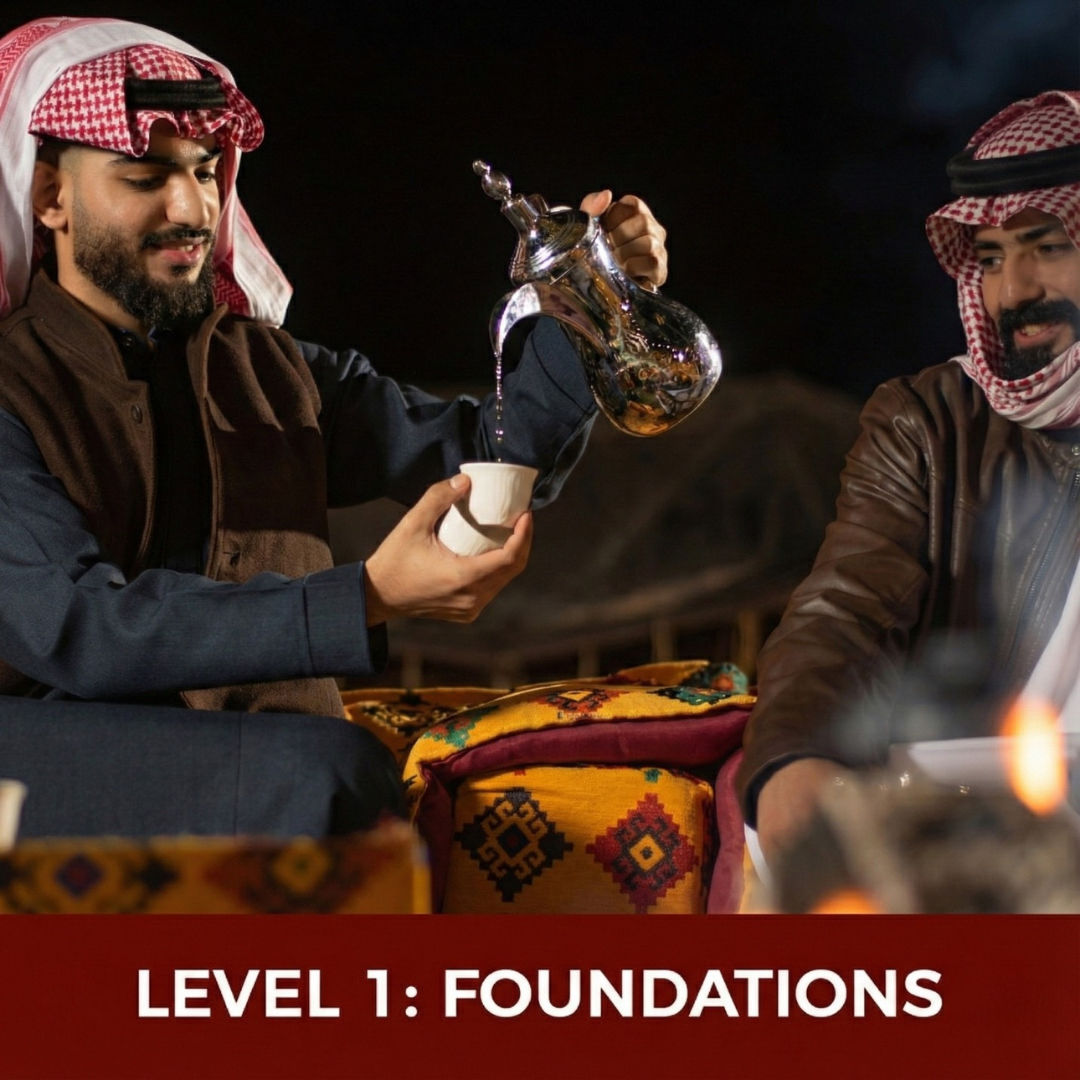
Level 1: Foundations
Overview: Level 1 builds a clear base in Gulf Arabic (Khaleeji) and develops confidence in everyday communication through guided speaking practice, role-play, and dialogue. Students learn high-frequency vocabulary, key expressions, and core structures used in the Gulf, applying them in practical situations such as greetings, small talk, getting around the city, and everyday transactions.
Courses: GUL 101 – Establish the essentials of conversation: asking and answering simple questions, understanding common Gulf expressions, and knowing when to shift from fusha to spoken Khaleeji. Students reach approximately Beginner A (ACTFL). GUL 102 – Strengthen fluency and accuracy in daily exchanges, expanding listening through authentic materials (announcements, signage, short clips, everyday audio). Students progress toward Intermediate B (ACTFL).
GUL 103 – Consolidate and extend Level 1 skills, focusing on smoother, more confident conversation and stronger comprehension of commonly heard Khaleeji in real contexts. Students complete the Foundations track at Intermediate B (ACTFL).Duration: Three sequential courses, each 10 weeks in length, with one live private 1-on-1 session (50 minutes) per week.
Prerequisites: Familiarity with the Arabic alphabet, plus basic Arabic grammar and vocabulary.
Tuition: $495 per course.
-
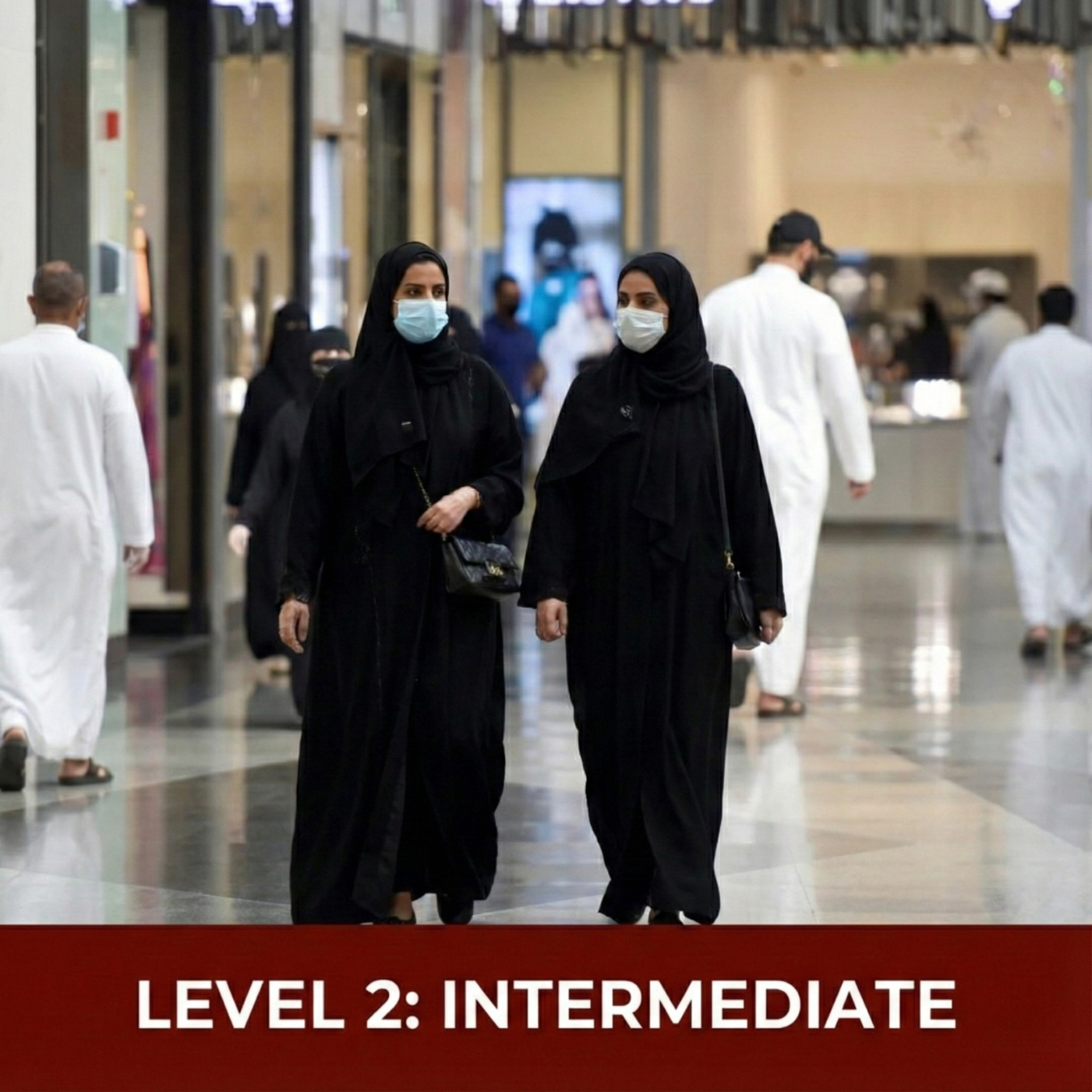
Level 2: Intermediate
Overview: At this stage, students can follow straightforward conversations and communicate in familiar situations, but fusha may still appear more than Khaleeji in spontaneous speech. Level 2 shifts the balance toward real spoken Gulf Arabic, with a strong emphasis on listening and sustained conversation—the skills that matter most for living, studying, or working in the GCC. Students expand their working vocabulary and expressions for everyday contexts such as dining out, shopping and services, describing people and preferences, home routines, social etiquette, and navigating common real-life situations in the Gulf.
Courses: GUL 201 – Build confidence in everyday dialogue, handling familiar situations with greater ease in Khaleeji. Students begin using region-appropriate idioms and set phrases naturally. GUL 202 – Strengthen conversational fluency and listening stamina, expand descriptive ability, and manage exchanges that require more detail, nuance, and polite negotiation. GUL 203 – Consolidate skills for sustained conversation, enabling students to participate more comfortably in group settings and public interactions with increasing independence.
Duration: Three sequential courses, each 10 weeks in length, with one live private 1-on-1 session (50 minutes) per week.
Prerequisites: Completion of Level 1 (online or on-site), or placement via exam.
Tuition: $495 per course.
Note: This program is currently in development; enrollment will open soon.
-
Level 3: Advanced
Overview: At this stage, students have a strong command of core Khaleeji structures and a broad working vocabulary, allowing them to engage in meaningful dialogue about their surroundings, work, and community. The focus remains on listening and conversation, with guided practice drawn from authentic Gulf materials—short clips and interviews, lifestyle and cultural content, practical texts (menus, recipes, announcements), and topics that surface in everyday life and professional settings.
Courses: GUL 301 – Engage in structured discussions on society, culture, and community life in the Gulf, expanding your ability to navigate a wider range of topics in Khaleeji. GUL 302 – Build accuracy across tenses and sentence patterns, tell detailed stories, and sustain extended conversations with clarity and natural pacing—understandable even in fast, native speech. GUL 303 – Consolidate advanced proficiency with emphasis on precise expression, well-placed idioms and proverbs, and higher-level listening comprehension—bringing your spoken Khaleeji closer to confident, near-native communication.
Duration: Three sequential courses, each 10 weeks in length, with one live private 1-on-1 session (50 minutes) per week.
Prerequisites: Completion of Level 2 (online or on-site), or placement via exam.
Tuition: $495 per course.
Note: This program is currently in development; enrollment will open soon.
“The weekly one-on-one sessions with my instructor have been essential to my learning. Whenever I feel hesitant about expressing myself or uncertain in my grasp of a concept, these sessions provide clarity and confidence. That dedicated time to practice, with thoughtful guidance, has made all the difference in deepening both my fluency and understanding.”
— Ray L., College Professor
What makes Qasid Online unique?

-
No more adjusting your life around fixed group schedules. With 1-on-1 sessions, your instructor offers multiple time options, and you simply choose what works best. This flexibility makes it far easier to attend every session consistently.
-
In group classes, instructor attention is divided. In private sessions, 100% of the time is devoted to you—maximizing progress and depth of learning.
-
One-on-one learning means your instructor can concentrate on your specific challenges and goals, rather than balancing the needs of many students at once.
-
Private instruction moves at the pace that best suits you. Move quickly when you have momentum, or slow down during busier weeks—your instructor will adjust to keep you moving forward effectively.
How the Programs Work
Qasid Online combines a rigorous, academically designed curriculum of recorded materials (video lessons, texts, and quizzes) with live, private 1-on-1 sessions—bringing together the best of structured content and personalized instruction.

Structured Pathway
Each course runs for 10 weeks and, at a steady pace, covers the equivalent of one university quarter of Arabic. Completing three consecutive courses equates to roughly one full year of university-level Arabic study.

Individual Instruction
Students receive one live, 50-minute, one-on-one class each week with a Qasid instructor—ensuring focused guidance, individualized feedback, and steady progress.

Dedicated Learning Platform
During each 10-week enrollment, students gain full access to Qasid’s custom Learning Management System (LMS), which houses the entire MSA curriculum—hundreds of videos, PDFs, and quizzes designed to reinforce live instruction.

Academic Mentorship
Alongside your instructor, you’ll be paired with an academic mentor who supports your learning journey, helping you navigate challenges and stay on track toward your goals.

Community Support
Beyond your individual classes, you’ll have access to Qasid’s private, student-only community, where you can connect with peers, exchange insights, and ask questions.

Scholarly Recognition
Upon successfully completing each level, you’ll receive an official Qasid Certificate of Completion—digital by default, with a printed copy available upon request to support your academic or professional portfolio.
“Qasid isn’t just another self-study program. In less than a year, I was able to hold a basic conversation in Arabic with my teacher during live sessions. Within just a few months, I could already read and write the language—something that still amazes me. The flexibility of online learning has been incredible: I can spend time with my family, be present as a mother, and still make real progress in Arabic.”
— Amanda F., Level 2 Intermediate Student
Frequently Asked Questions
-
Absolutely. Many of our students begin with no prior knowledge of Arabic. We start by teaching you the alphabet and foundations, and then guide you—step by step—towards fluency.
-
Not at all. We’ve worked with learners of all ages, professions, and family commitments. With our method, age and schedule are no barrier. We’ll show you how to make consistent progress—even if you have a demanding job or children at home.
-
Every student progresses differently, depending on effort, background, and consistency. We won’t make empty promises of “fluency in 3 months.” Instead, we provide a structured curriculum, live support, and lifetime access to resources. If you stay committed, you’ll look back in 1–2 years amazed at how far you’ve come.
-
Qasid Online is the only program built on over a decade of experience teaching 10,000+ students worldwide. Unlike “Arabic-lite” courses, our curriculum mirrors university-level rigor while giving you lifetime access to videos, quizzes, worksheets, and a library of 24/7 resources. And with one-on-one live sessions, your learning is always personal and practical.
-
You’ll work through a structured curriculum of pre-recorded lessons, exercises, and quizzes at your own pace. Once a week, you’ll meet one-on-one with a native instructor to practice speaking, get personalized feedback, and have your questions answered. This blend of self-paced learning and live mentorship keeps you both flexible and accountable.
-
No travel is required. All core materials are available online, on-demand, from anywhere in the world. Your live sessions are scheduled with your instructor at times that work for you, so you can progress without uprooting your life or career.
-
We recommend 5–10 hours per week. The more consistently you invest, the faster your progress. With lifetime access, you can move as quickly—or as slowly—as your schedule allows.
-
Because the program combines self-paced study with flexible live sessions, you’ll never “miss the boat.” You can pause, slow down, or catch up whenever your schedule allows. Our goal is sustainable, long-term growth—not short-term pressure.
-
The MSA program is organized into five levels, with each course lasting 10–20 weeks. Some students complete three or more courses a year, while others take breaks between levels. Your timeline is flexible, designed to fit around your life commitments.
-
Every student—beginner or advanced—takes a placement test. This diagnostic (not pass/fail) allows our academic team to place you at the right level, so you build on your strengths without repeating material unnecessarily.
-
Once you’ve completed payment, you’ll take the placement quiz, book an orientation session, and gain full access to your online platform. You’ll then schedule your one-on-one live sessions and begin your first course.
-
Each course is $495 USD. For example, Level One (Foundations) includes three courses—each at $495. You’re not required to register for all at once, giving you financial and academic flexibility.
-
Yes. Tuition can be split into two monthly installments: one at enrollment, and the second one month later.
-
Qasid Online courses can be taken for a grade and credit, but that credit cannot be applied toward a degree at the moment. It may be possible to apply that credit toward a degree program at another college or university, depending on that institution’s academic policies.
-
Yes. Upon successful completion of a program, you’ll receive a certificate of completion from Qasid Online. Students may also request an official transcript for their coursework.