Why Gulf Arabic Matters Now More Than Ever
The Gulf’s Rise as a Global Hub: Economy and Culture
The modern skyline of Dubai rising from the desert is emblematic of the Gulf’s rapid transformation into a global hub. The countries of the Gulf Cooperation Council (GCC) – particularly the UAE, Saudi Arabia, and Qatar – have experienced astonishing growth in recent decades. Originally known for oil wealth, these states are now investing heavily to diversify into finance, tourism, technology, and culture. Major initiatives like Saudi Arabia’s Vision 2030 and the UAE’s Knowledge Economy plans signal a decisive pivot from solely oil-based, rentier economies toward knowledge-driven development. Culturally, the Gulf is stepping further onto the world stage by hosting high-profile global events. The UAE’s Expo 2020 in Dubai (the first World’s Fair in the Middle East) and Qatar’s FIFA World Cup 2022 (the first ever in an Arab country) showcased the region’s ability to welcome millions of international visitors and invest in world-class infrastructure. These events, alongside international art exhibitions, concerts, and sporting tournaments, have solidified the Gulf’s image as a dynamic global crossroads. The GCC today is a central hub of global business and culture, drawing talent and attention from every corner of the world.
A Melting Pot: Migration and New Diversity in the Gulf
Foreign nationals now make up more than half of the population of most Gulf states (mid-2022 data), underscoring the region’s reliance on global talent. The Gulf’s economic boom and political stability have made it one of the world’s largest immigration magnets. Collectively, the six GCC countries are home to roughly 30 million foreign residents – more than half the region’s total population. In Qatar, expatriates account for about 88% of the population, and in the UAE around 89%; even Saudi Arabia’s population is roughly 42% foreign-born. The UAE, in particular, has embraced an open-door policy for skilled workers and professionals, creating a melting pot of over 200 nationalities living and working together. This migration is not limited to neighboring Arab or Muslim-majority countries. Non-Muslim migration to the Gulf has surged, adding new layers to its social fabric. In the UAE, for example, there are substantial communities of Christians (around 12.9%) and Hindus (around 6.2%), Buddhists (around 3.2%), and others together forming about a quarter of the total population. Even Saudi Arabia, long perceived as culturally closed, now hosts millions of non-Muslim expatriates – an estimated 2.1 million Christians lived there as of 2022, all of them foreign workers drawn by economic opportunity.
Policy Shifts and Cultural Openness
These demographic changes have spurred Gulf governments to adapt. Countries like the UAE and Saudi Arabia are relaxing historic restrictions and creating new pathways for long-term residence or employment visas to attract global talent. The UAE has introduced “golden visas” for investors and skilled professionals, while Saudi Arabia launched a Premium Residency program in 2019 allowing select expatriates to live in the Kingdom without a local sponsor. Socially, there is a growing climate of religious tolerance and cultural openness in many Gulf states. Such developments mark how far the Gulf has come in embracing the diverse faiths and cultures of its expatriate communities. For newcomers from Western countries or other non-Muslim backgrounds, this trend offers a more welcoming environment – yet it also highlights the need to find common threads, language foremost among them, to bridge cultural divides.
From Expat Bubbles to Belonging
Let’s be honest — it’s entirely possible to live in the Gulf within an English-speaking “expat bubble.” You can work, shop, and socialize without ever venturing beyond English. But in doing so, you miss the real heartbeat of the place. Learning Gulf Arabic opens the door to authentic daily life: shopping in local markets without relying on English, ordering food with confidence, and exchanging friendly words with neighbors in their own tongue. Even the smallest gestures matter — a warm marhaba to your doorman or a sincere mashkoor to a shopkeeper can transform interactions from purely transactional to genuinely personal. Over time, these moments build trust, rapport, and a deeper sense of belonging.
Learning the Dialect is the Gateway to Real Connection
In a region as international as the Gulf, one might assume English alone is enough. While it is widely used in business and tourism, Arabic remains the bedrock of local society — and it is the Gulf Arabic dialect (Khaleeji), not the formal Modern Standard Arabic (MSA) of textbooks, that dominates everyday life. Gulf Arabic is the language of informal business conversations, marketplace bargaining, social media, and friendships across the GCC. MSA appears in official documents and news broadcasts, but it’s the local dialect that truly enables you to navigate and connect in daily life — whether you’re chatting with a taxi driver, negotiating a rental lease, or building rapport with colleagues. As one UAE language educator observed, learning Arabic, particularly its colloquial form, signals genuine commitment to integration and respect for local culture, instantly earning goodwill. Speaking in the local dialect breaks down barriers, allowing you to engage with Gulf Arabs on a more personal, authentic level. In short, Gulf Arabic isn’t just a language skill — it’s your gateway from the expat bubble into real connection and belonging.
Career Advantages in the Gulf
Beyond social integration, Arabic dialect skills can be a career game-changer in the Gulf. Employers increasingly prize bilingual talent, and local language ability is often a decisive advantage. A survey by the Middle East’s largest job portal found that 51% of UAE employers prefer candidates who can communicate in both English and Arabic. Job listings in the Gulf are increasingly adding “Arabic speaker preferred,” especially for roles in government, media, sales, and customer service. Even when not explicitly required, Arabic can tip the scales: recruiters note that given two equally qualified candidates, the one fluent in Arabic has a “definite advantage” in securing the role. Gulf dialect proficiency is especially valuable in roles involving local clients, government agencies, or the public. In sectors like banking, consulting, or healthcare, speaking the client’s language builds immediate trust. Unsurprisingly, many expatriates now recognize Arabic’s career benefits. Training centers in the UAE report that most expat students study Arabic primarily for career advancement, with one institute noting that “70% of [our] students learn Arabic for work.” In the Gulf’s competitive job market, Gulf Arabic skills are a powerful differentiator, signaling both competence and cultural fluency.
Illustrative Scenarios
-
A Canadian consultant assigned to a project in Riyadh presents in English during meetings but switches to Arabic during coffee breaks, joking with Saudi colleagues in the local dialect. That simple shift – saying “Kayf halak?” (how are you?) or chatting about weekend plans – breaks down barriers. Months later, when her firm bids on a new contract, those connections give her team the edge. Across the Gulf, professionals who grasp dialect nuances gain an advantage in networking and relationship-building.
-
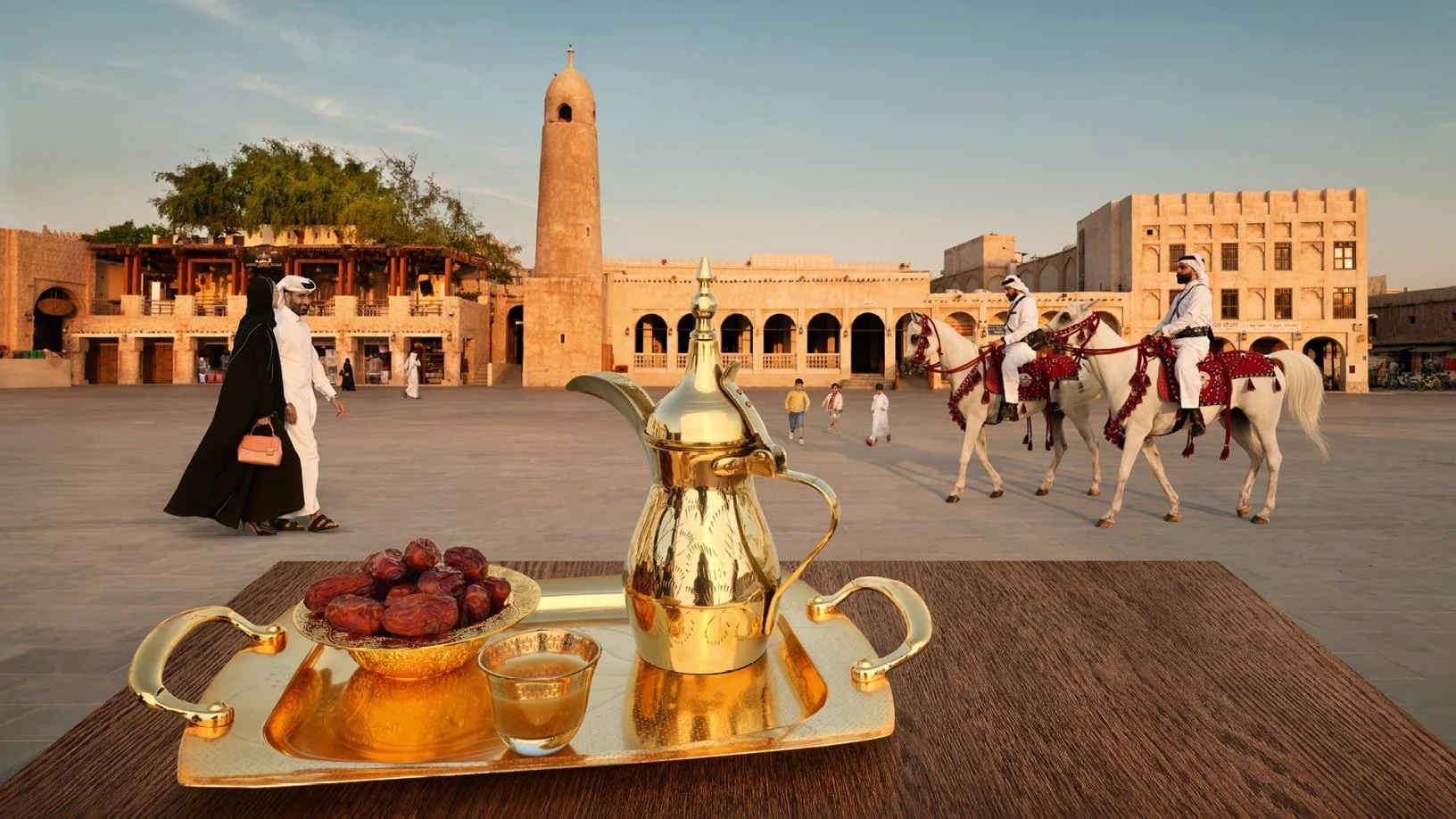
A British graduate student at Education City in Qatar studies Middle East politics but finds her richest lessons outside class – at cultural events, exhibitions, and cafés. At a National Day majlis tent, she greets her Qatari hosts with “Salam alaikum, shlonkom?” (“Peace be upon you, how are you all?”). The elders beam, offer coffee, and share stories in Gulf Arabic. By evening’s end, she’s invited to a family gathering. Her willingness to use the dialect turns a formal encounter into genuine friendship.
A Passport to the Entire Region
Gulf Arabic has a wider reach than many realize. While each nation has its own variation – Saudi, Emirati, Qatari – these dialects are mutually intelligible across the GCC due to shared history and close social ties. A Kuwaiti might use unique phrases, a Saudi from Riyadh a distinct accent, yet conversations flow easily. Linguists classify “Khaleeji” as a cluster of dialects with high overlap, especially in urban centers. Learning core Gulf Arabic equips you to communicate in all six GCC states without re-learning for each. For a professional doing business in Dubai, traveling to Doha, and meeting in Riyadh, that’s a huge advantage. It also opens up a rich array of regional media – from Emirati YouTubers to Kuwaiti dramas – that share a common dialectal thread. Compared to other Arabic varieties, Khaleeji has been underrepresented in language programs, but its value is now undeniable.
Qasid’s Gulf Arabic Program: Bridging the Gap
Recognizing this need, Qasid Arabic Institute has led the way in Gulf dialect training. With over eight years of experience teaching Gulf Arabic to diplomats, business leaders, and students, Qasid understands both the nuances of Khaleeji and how to teach it effectively. We have seen learners flourish as they move beyond textbook Arabic into colloquial speech – gaining confidence, building deeper relationships, and broadening their careers. Now, for the first time, we are offering this expertise to a wider audience through our new Gulf Dialect online course. Developed over nearly a decade, it is designed for modern learners – Western university students and professionals heading to the Gulf who need practical, flexible training in daily-life language. Classes are led by trained instructors, ensuring authentic pronunciation and idioms. The program immerses you in real-world scenarios – workplace discussions, social gatherings, and market interactions – all in Gulf dialect. And because it’s online, you can join from anywhere, fitting studies around your schedule. By the end, you won’t just know Gulf Arabic – you’ll be able to live it, whether networking in Dubai or sharing coffee in Doha.
Final Word: A Language for the Gulf’s Future
The Gulf’s star is rising. Its economies are diversifying, its societies are opening, and its culture is resonating globally. In this context, Gulf Arabic is more than a language skill — it’s a key to opportunity, understanding, and genuine connection. Whether your path leads to a Dubai boardroom, a Riyadh conference, a Qatari family gathering, or a Bahraini art festival, speaking the dialect will open doors others cannot see. At Qasid, we invite you to take that step. Our new Gulf Arabic course is not just about words and grammar — it’s about equipping you to be part of one of the world’s most exciting regions. As they say in the UAE, Ya Marhaba! — you are most welcome to join the journey.